

An off-track or misaligned garage door occurs when the rollers slip out of their proper position within the metal track system, causing the door to operate improperly or become stuck. The safety risks associated with misaligned garage doors are significant, including the potential for sudden door collapse that could injure family members or damage vehicles parked in the garage. In addition, continued operation of a misaligned door increases repair costs exponentially as the problem spreads to other components like springs, cables, and the opener motor, while also creating potential property damage from a door that no longer closes securely.
For over 32 years, Palmer Garage Door has served as Connecticut’s trusted local expert for diagnosing and repairing garage door alignment issues with fast response times and quality workmanship. Our experienced technicians understand that garage door off-track situations require immediate attention to prevent injuries and protect your home investment.
5 Signs Your Garage Door Is Misaligned
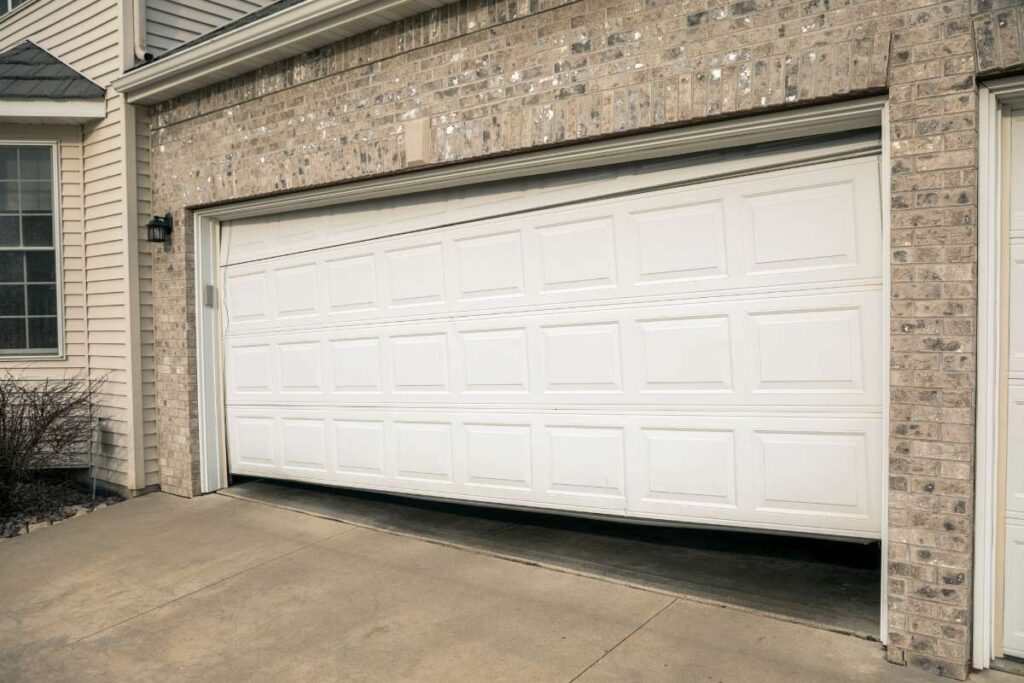
1. The Door Appears Uneven or Crooked
When you observe your garage door during operation, one side may sit noticeably higher or lower than the other side, creating an obvious visual imbalance that worsens as the door opens or closes. The door may also tilt or lean dramatically to one side when fully open or partially closed, showing clear misalignment that compromises both function and safety. This tilting becomes more pronounced over time as the misalignment stresses other components and pulls additional rollers out of position.
2. Loud Grinding, Scraping, or Squeaking Noises
Unusual grinding, scraping, or high-pitched squeaking sounds during door operation indicate that rollers are struggling against misaligned tracks rather than gliding smoothly along the intended path. Metal-on-metal contact occurs when rollers ride along the edge of the track or drag against bent sections, producing harsh sounds that typically grow louder as the damage progresses. If you hear these warning sounds, the misalignment has already begun causing wear that will worsen rapidly without professional intervention.
3. Jerky, Slow, or Hesitant Movement
A properly aligned garage door moves smoothly and consistently from fully closed to fully open without pausing or stuttering along the way. This jerky movement happens because tracks or rollers are binding at specific points where alignment is worst, creating resistance that the opener must overcome. The inconsistent motion places tremendous stress on the opener motor and can eventually cause the system to fail completely if the binding becomes too severe.
4. The Door Stops Midway or Reverses Unexpectedly
Modern garage door openers include safety sensors that detect unusual resistance or obstruction, causing the door to stop midway through its cycle or reverse direction unexpectedly to prevent damage or injury. The tracks may be too damaged, bent, or mispositioned for the door to travel smoothly, triggering repeated safety reversals that make it impossible to open or close the door fully. This safety feature protects you from a more serious failure, but it also signals that professional garage door repair is needed immediately.
5. Visible Damage to Tracks, Rollers, or Hardware
A visual inspection may reveal bent or warped garage door tracks, rollers that are popping partially out of the track channel, or loose mounting brackets that no longer hold the track system firmly against the wall. You may also notice visible gaps between the rollers and the track rails where the roller should be seated fully within the channel. These gaps indicate that rollers have dislodged or that track position has shifted, both of which require immediate correction to prevent complete system failure.
What Causes A Garage Door To Be Misaligned On Its Track (and What It Really Means)
A garage door misalignment occurs when one or more rollers slip out of their proper position within the vertical and horizontal tracks that guide the door’s movement, disrupting the carefully engineered balance that allows safe operation. When misalignment develops, it can quickly cascade into serious mechanical damage as increased stress transfers to springs, cables, hinges, and the opener motor. Complete door failure becomes increasingly likely the longer the misalignment continues, potentially leaving your garage unusable and your home vulnerable until repairs are completed.
Common Causes
- A vehicle impact that directly strikes the track system can instantly bend the metal garage door tracks or forcefully dislodge rollers from their channels.
- Worn, damaged, or broken rollers that have exceeded their service life no longer maintain proper contact with the track surface, causing them to wobble, skip, or jump out of position during operation.
- Loose or bent track brackets that mount the track system to the garage wall can pull the entire track out of its correct position, creating misalignment across the door’s entire travel path.
- Broken or frayed cables on one side of the door cause that side to drop, creating visible misalignment and placing dangerous stress on the remaining components.
- Debris or foreign objects lodged in the track, such as stones, ice buildup, leaves, or broken hardware pieces, create obstructions that force rollers out of their proper path.
- Age-related warping, weather exposure, and general wear and tear gradually degrade track straightness, roller condition, and bracket integrity over the years of operation.
Why It Matters
Misalignment fundamentally disrupts the door’s carefully engineered weight distribution, causing some components to bear loads they weren’t designed to handle. This imbalanced loading accelerates hardware wear across the system and increases the likelihood of sudden failures that could cause injury or property damage.
Increased strain is transferred to the opener motor, springs, and cables as they work harder to compensate for the resistance caused by misalignment. The opener motor may overheat or burn out, springs may snap under uneven tension, and cables may fray or break as they attempt to lift a door that no longer moves freely.

The potential for sudden door collapse or catastrophic motor burnout grows with every operation cycle once misalignment develops. What begins as a minor tracking issue can rapidly progress to a dangerous situation where the door falls unexpectedly or becomes completely inoperable.
The Dangers of Ignoring a Misaligned Garage Door
Safety Hazards to You and Your Family
A misaligned garage door can fall or slam shut unexpectedly when springs snap, cables break, or rollers completely leave the track system. Heavy garage doors pose a serious risk of crush injuries to children, pets, or adults in the door’s path when they fail. Property damage to vehicles, stored items, or the garage structure itself becomes likely when a multi-hundred-pound door drops from an elevated position without warning.
Stress on the Opener and Mechanical Components
The garage door opener motor must overwork continuously to compensate for the increased resistance created by misaligned tracks and binding rollers. Gears, belts, drive chains, and other internal opener parts experience accelerated wear and may fail prematurely when forced to overcome misalignment resistance. Eventually, the opener motor itself may burn out completely, requiring expensive replacement that could have been avoided with timely track realignment.
Damage to Panels, Springs, Rollers, and Hinges
Uneven spring tension distribution caused by misalignment leads to stress concentrations that crack door panels, bend hinge plates, or cause springs to snap unexpectedly. Damage spreads rapidly across interconnected parts because each component depends on others to maintain their proper function and position. What begins as a single bent track section can progress to damaged rollers, then broken hinges, then cracked panels as the cascade of failures moves through the system.
More Expensive Repairs Later
A simple professional realignment service that addresses the problem early can prevent the need for extensive component replacement if the issue is ignored and allowed to worsen. Palmer’s repair services can often restore proper function with minimal parts replacement when misalignment is caught early.
Preventative service through timely realignment is far more cost-effective than waiting until springs snap, cables break, panels crack, or the opener motor burns out. Emergency repairs after catastrophic failure typically cost three to five times as much as promptly addressing initial misalignment symptoms.
Reduced Home Security
Misaligned garage doors frequently fail to close fully or latch properly, leaving gaps at the bottom or sides that compromise your home’s security perimeter. The vulnerability to break-ins increases substantially when your garage door cannot secure properly due to alignment issues. Many homeowners don’t realize their door isn’t fully closed until after a security incident occurs, making prompt repair of any alignment problems essential for home protection.
Palmer Is Connecticut’s Garage Door Realignment & Repair Specialists
Early detection of garage door misalignment, combined with fast professional action, prevents minor tracking issues from escalating into dangerous failures or expensive system replacements. Off-track and misalignment issues are both urgent safety concerns and preventable problems when addressed promptly by experienced technicians.
At Palmer Garage Door, we offer a comprehensive refresh package specifically designed to address all common misalignment causes, including track straightening, roller replacement, bracket reinforcement, and complete system testing to ensure reliable operation backed by our lifetime workmanship guarantee.If you’ve performed a visual inspection and observed any signs of misalignment, stop using your garage door immediately until a professional inspection confirms safe operation. Contact Palmer Garage Door today to schedule professional realignment, emergency repair, and comprehensive safety inspection services.