
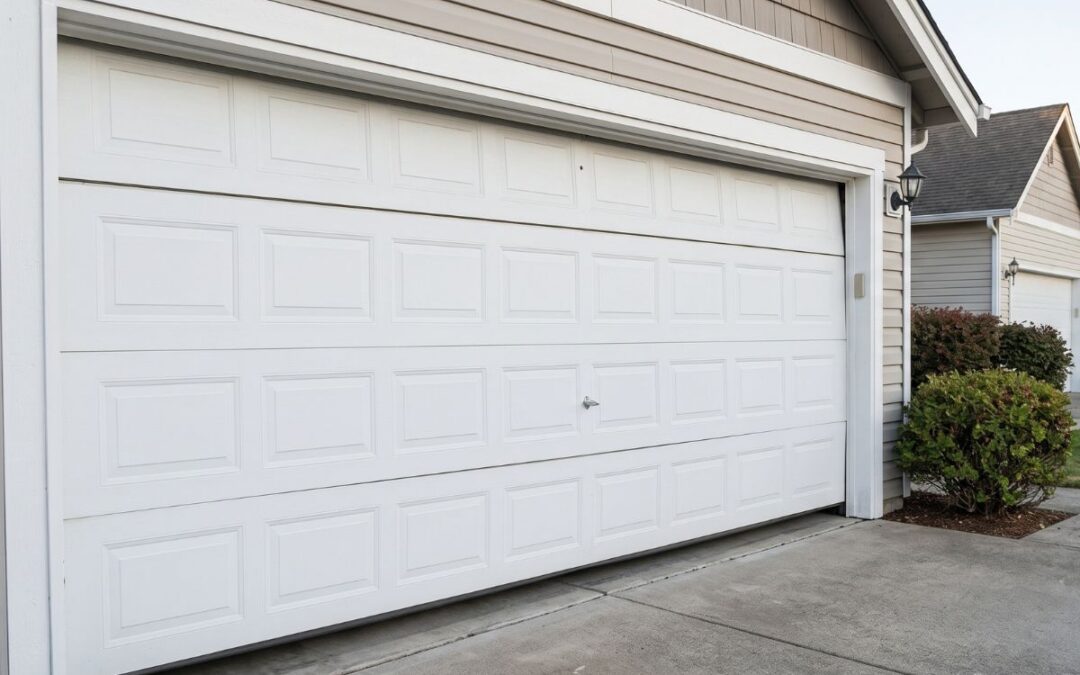
A garage door is held in balance by springs and cables under extreme tension. When one part fails, the door can quickly become a serious safety risk.
Some issues, like a broken garage door spring or a snapped cable, mean the door shouldn’t be used until it’s repaired. Next, we cover five warning signs, when to stop using your garage door, and why repairs should be handled by the professionals at Palmer Garage Doors.
Why a Damaged Garage Door Is More Than an Inconvenience
Most garage doors weigh hundreds of pounds, and springs and cables do the heavy lifting. That’s where the real garage door danger lies: when one of those parts fails, that weight is no longer controlled.
Because these parts wear gradually, the warning signs are often subtle at first. Knowing what to look for helps you act before a minor issue turns into an accident.
A damaged garage door can:
- Fall suddenly without warning
- Pinch hands and fingers between panels or hardware
- Crush vehicles, bikes, or anything else beneath it
- Leave your garage and home unsecured
Catching problems early protects your household and prevents further damage to the system.
5 Warning Signs Your Garage Door Is a Safety Hazard
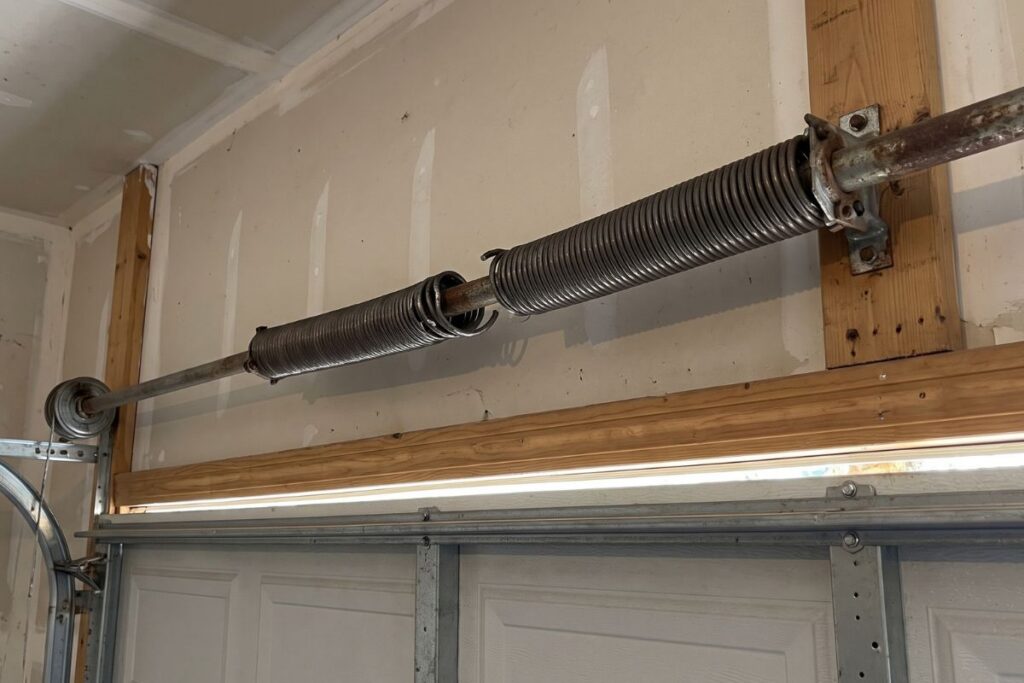
Sign 1: A Broken Garage Door Spring
Watch for these signs of a broken spring:
- A loud bang from the garage, often when no one is using the door
- A visible gap in the spring coil
- A door that only lifts a few inches or feels extremely heavy
Without a working spring, the door can slam down without warning. Spring repair is one of the most dangerous garage door jobs and should always be handled by a trained technician.
Sign 2: Frayed, Loose, or Snapped Cables
Frayed, rusted, or slack cables are close to failing. A snapped cable can whip with force and leave the door hanging unevenly.
Inspect the cables near the bottom brackets on both sides of the door. If you see broken strands or rust, stay clear and call for service.
Our article on why you shouldn’t replace a snapped cable yourself explains the risks in more detail.
Sign 3: The Door Is Crooked or Coming Off Its Tracks
A door that hangs unevenly, jerks, or rubs against the frame may have bent tracks or worn rollers. An off-track door can jam or fall, putting anyone nearby at risk.
Don’t try to bend tracks back into place or force the door along them. The tracks support the door’s full weight, and a misstep can bring the door down.
Sign 4: The Auto-Reverse Safety Feature Isn’t Working
Your door should stop and reverse when something is in its path. If it doesn’t, or the photo-eye sensors near the floor are blinking, misaligned, or damaged, this key safety system has failed.
This feature is especially important in homes with children and pets, who may not notice a closing door until it’s too late.
Test it periodically by placing an object, such as a roll of paper towels, in the door’s path. If the door doesn’t reverse, call for service.
Sign 5: The Door Drops Quickly or Won’t Stay in Place
A balanced door moves smoothly and stays put when partially open. Drifting, fast drops, or a heavy feel point to worn or failing springs.
These symptoms tend to get worse over time. A door that drifts today may fail completely tomorrow, so it’s best to have it inspected promptly.
When to Stop Using Your Garage Door
If you notice any of these signs, stop using the door until it’s repaired. In the meantime:
- Keep people, pets, and vehicles clear of the door
- Don’t try to force the door open or closed
- Never attempt spring or cable repairs yourself
- Call a professional garage door technician right away
Spring and cable systems store enough energy to cause serious injury. Trained technicians have the tools and experience to release that tension safely.
Don’t Wait on a Dangerous Garage Door: Call Palmer for Fast, Safe Garage Door Repair
A broken spring, damaged cables, an off-track door, a failed auto-reverse system, or a door that won’t stay in place are all garage door safety hazards. None of them should be put off.
With more than 50 years of experience, Palmer Garage Doors is Connecticut’s trusted team for safe, high-tension garage door repair. We repair broken springs, cables, tracks, and rollers and get your door working safely again.
Regular maintenance helps, too. A professional tune-up can catch worn springs, frayed cables, and misaligned sensors before they become dangerous.
If your door is beyond repair, our guide on whether to repair or replace a garage door can help you weigh your options. Contact Palmer Garage Doors or call (203) 881-9979 today to schedule a repair.