A garage door that is 15 years or older is approaching the end of its typical service life, and many homeowners find themselves asking the same recurring question: is another repair really worth the cost?
Next, we will walk through the average garage door lifespan, the warning signs that signal serious decline, and the financial tipping point where replacement becomes the smarter investment. Whether your door is noisy, slow, damaged, or simply outdated, the sections below give you a clear framework for making a confident, cost-informed decision. We cover repair frequency, safety risks, energy efficiency, and curb appeal so you can weigh every angle before spending a dollar, and at Palmer Garage Doors, our team is always here to help with expert garage door repair when you need it.
Understanding Garage Door Lifespan: What to Expect from Your Door
Average Lifespan of a Residential Garage Door
Knowing how long your door should last is the foundation of any repair-or-replace decision. Lifespan varies by material, but a few general ranges hold true.
Typical service life by type:
- Steel and aluminum doors typically last 15 to 30 years, depending on maintenance, climate, and how often they are used.
- Wood doors usually last 15 to 25 years, but are more vulnerable to moisture damage and warping in humid conditions.
- Openers have a shorter lifespan of 10 to 15 years, so they often need replacing before the door itself does.
Because the opener wears out faster than the door, many homeowners face an opener replacement partway through the door’s life, which is an important factor when you weigh your options.
Factors That Shorten or Extend Garage Door Lifespan
Those ranges are only averages. Real-world conditions can move your door toward either end of the scale, sometimes dramatically.
What moves the needle:
- Coastal or high-humidity locations accelerate rust and corrosion, cutting overall longevity.
- High-cycle doors rated for 10,000 or more cycles per year outlast standard doors in busy households.
- Routine maintenance, including annual lubrication, spring inspections, and weatherstripping replacement, adds years of service.
- Impact damage from a vehicle or severe storm can compromise a door structurally long before its expected age.
The takeaway is simple: a well-maintained door in a mild climate may serve you for decades, while a neglected or damaged one can reach the end of its usefulness years ahead of schedule.
When to Replace Your Garage Door: 5 Signs It’s Time
Before running through the signs, it helps to know the single most useful benchmark in this decision: the 50 percent rule. If your cumulative repairs over the past few years now add up to half or more of the cost of a new door, replacement is almost always the smarter financial move. With that rule in mind, here are five signs it is time to replace rather than repair.
1. Your Opener and Door Are Failing Together
When both the door and the opener start showing their age at the same time, repairing them piecemeal rarely makes sense.
- The opener is 10 to 15 years or older and starting to malfunction, with slow response, grinding noises, or intermittent failures.
- Bundling opener and door replacement into one job typically costs less than two separate repair visits and parts orders.
- Newer opener and door systems are designed to work together, so replacing them as a pair avoids compatibility issues later.
2. The Door Has Structural Damage
Structural problems go beyond cosmetics and affect how safely and reliably the door operates.
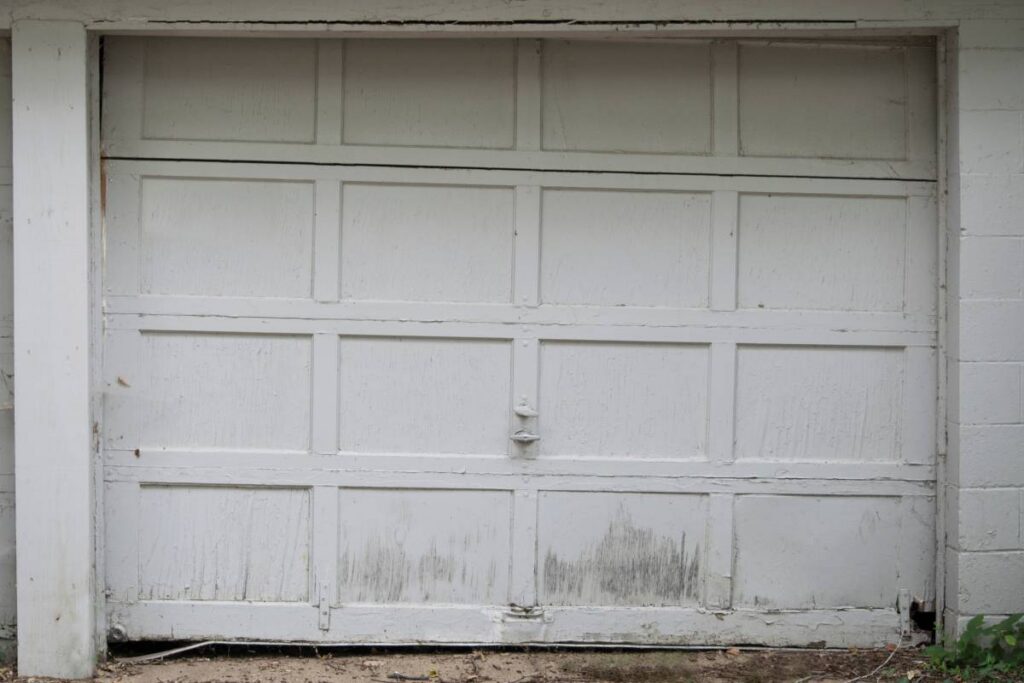
- Warped or bowed panels that no longer sit flush or seal properly against the frame.
- Rust-through spots on steel panels, which weaken the material and tend to spread.
- Storm, debris, or vehicle-impact damage that has bent the frame or track.
- Cracks or splits that affect the door’s balance, movement, or ability to stay on its track.
3. The Door Isn’t Safe Anymore
Safety issues are the clearest signal that a door has outlived its usefulness, and they should never be ignored.
- No auto-reverse sensors, so the door will not stop or reverse when it senses an obstruction.
- A door that fails to close fully or seals unevenly, leaving gaps for pests, weather, or intruders.
- Frayed cables, worn springs, or a door that drops suddenly instead of lowering smoothly.
4. Poor Insulation Is Costing You on Energy Bills
An aging, poorly insulated door can quietly raise your energy costs month after month.
- Noticeably higher heating or cooling costs, especially with an attached garage or living space above it.
- Drafts or temperature swings inside the garage even when the door is closed.
- An older door with no insulation, or an insulation type that cannot be retrofitted or upgraded.
- Attached-garage issues bleeding into adjacent rooms and making the whole home harder to keep comfortable.
5. The Door Is Hurting Your Curb Appeal and Resale Value
Your garage door is one of the largest visible features of your home’s exterior, so its appearance carries real weight. A new door is consistently one of the highest-return upgrades at resale, and you can browse styles in our project gallery.
- Faded, chipped, or peeling paint that stands out against an otherwise well-kept exterior.
- An outdated style or color that clashes with updated siding, trim, or landscaping.
- Visible dents, damage, or wear that buyers and appraisers will notice during a sale.
- A tired-looking door dragging down the first impression of the home’s whole front elevation.
5 Indicators a Repair Is Still the Right Call
Replacement is not always the answer. Plenty of doors have years of reliable service left and simply need a targeted fix. Here are five signs that repair remains the smarter choice.
1. The Problem Is Isolated to a Single Component
When only one part has failed, and everything else is sound, a focused repair is usually all you need.
- A single worn or broken spring, cable, roller, or hinge, while the rest of the door works normally.
- A malfunctioning sensor or opener part that can be swapped out without touching the door panels.
- A door that still opens, closes, and seals properly apart from the one identified issue.
- No related wear elsewhere, such as track misalignment, panel warping, or added strain on the system.
2. The Door Is Middle-Aged with a Clean Repair History
A door in its middle years with a track record of reliability is often well worth maintaining.
- The door falls in the 10-to-14-year range, past new but not yet at the end of its life.
- Only one repair has been needed over that time, with no pattern of recurring breakdowns.
- No signs of accelerated wear, such as multiple components failing in close succession.
- Manufacturer or installer quality suggests the door was built to last well beyond this point.
3. The Issue Is Purely Cosmetic
Appearance problems that do not touch function or safety rarely justify a full replacement.
- Minor dents or scuffs on panels that are not visible from the street or driveway.
- Faded, chalky, or discolored paint that affects appearance but not material strength.
- No impact on how the door opens, closes, seals, or balances.
- No safety mechanisms, such as sensors, auto-reverse, or cables, involved in the issue.
4. Repair Costs Stay Well Under the 50 Percent Threshold
When the numbers clearly favor repair, there is no reason to replace a door prematurely. You can request a quote from Palmer to see exactly where your repair costs stand.
- Total repair spending over the past several years adds up to a small fraction of a new door’s cost.
- No single repair estimate comes close to replacement-level pricing on its own.
- The history shows occasional, routine maintenance rather than frequent, costly fixes.
- Continuing to repair still delivers clear value compared to the upfront cost of replacement.
5. Our Licensed Technicians Confirm There’s Nothing Deeper Going On
Sometimes the most valuable thing a repair provides is peace of mind, backed by a professional assessment.
- A full itemized inspection covering springs, cables, tracks, panels, and the opener system.
- Written confirmation that no structural or safety concerns were found beyond the immediate repair.
- A professional opinion that the door is a good candidate for continued repair rather than replacement.
- Documentation you can reference later if questions come up about the door’s condition or history.
Make the Smart Call: Protecting Your Home and Your Budget for Years to Come
A garage door older than 15 years is not automatically past its useful life, but it does deserve a clear-eyed evaluation of repair costs, safety features, energy performance, and the realistic number of reliable years it has left. The goal is a decision based on facts, not guesswork.
Use the 50 percent rule, track your cumulative repair spending, and weigh the intangible factors like curb appeal and home security alongside the hard numbers. When replacement is the right choice, it is one of the highest-return investments a homeowner can make, improving safety, efficiency, and resale value in a single project. Every replacement we install is also backed by the Palmer Promise, our lifetime workmanship warranty.
The best place to start is with an honest, documented assessment of your door’s current condition. Contact Palmer Garage Doors today or call (203) 881-9979 to schedule a professional inspection and make your repair-or-replace decision with total confidence.